Opt Out, Tune Down, Log Off: Why Boring Yourself to Death Is the Loudest Thing You Can Do Right Now
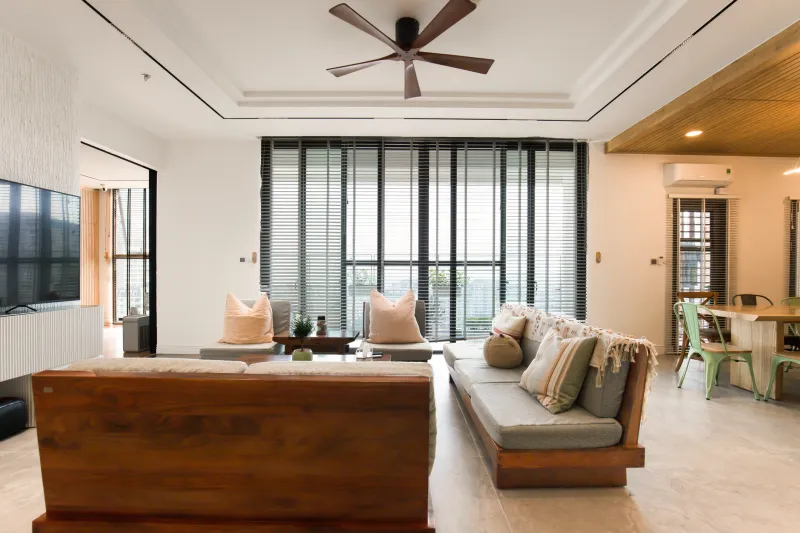
There's a TikTok account — no, we're not linking it, that's the whole point — that posts seventeen-second videos of a ceiling fan rotating. No music. No caption. No hook in the first three seconds. Just a fan. Moving. In a room. The comment section is either confused older millennials asking "is this a joke" or something closer to reverent: this is the most peaceful thing I've watched all week. It has 200k followers.
The algorithm hates it. And that's entirely the point.
The Feed Was Built to Make You Twitch
Let's be honest about what engagement optimization actually is. It's not a neutral system trying to connect you with content you love. It's a behavioral modification engine that has spent the better part of a decade learning exactly which neurological buttons to mash to keep you scrolling for eleven more seconds. Bright colors. Fast cuts. Emotional peaks every four seconds. A hook before the first breath. Trending audio whether it fits or not. The whole architecture of modern content creation is basically a manual for manufacturing compulsion.
And for a long time, creators played along — because they had to. The algorithm rewarded optimization and buried everything else. You either learned the game or you posted into a void.
But something shifted. Quietly, then all at once.
A growing slice of the internet — younger, weirder, more exhausted than they have any right to be at 22 — started posting content that refuses to perform. Long, unedited videos of someone cooking without narrating the process. Streams where nothing happens for stretches of thirty minutes. Discord servers with no bots, no roles, no weekly events, no gamification whatsoever. Just a text channel and some people occasionally typing something stupid. No growth strategy. No retention mechanic. Just vibes, degrading slowly in real time.
Deliberate Mediocrity as a Political Act
Here's the uncomfortable thing the engagement economy doesn't want you to sit with: the reason optimized content feels hollow isn't because the creators are bad at their jobs. It's because you can feel the optimization. You can sense the architecture underneath. Every transition, every thumbnail, every carefully placed emotional beat — it registers subconsciously as manipulation, even when you can't name it. The brain knows when it's being worked.
Anti-optimized content doesn't have that texture. A video of a ceiling fan doesn't want anything from you. A lo-fi art post with bad lighting and no call to action isn't trying to convert you into a subscriber. A Discord server that's just six people arguing about whether a specific episode of a show from 2009 holds up — that server has no exit funnel. There's nowhere it's trying to send you.
That absence of intent is, in 2025, genuinely radical.
When everything in your media environment is engineered to capture and redirect your attention, something that just sits there functions almost like a reset button. It's not impressive. It doesn't go viral. It doesn't scale. But it also doesn't leave you feeling like you just got pickpocketed of twenty minutes you didn't mean to spend.
The Borecore Aesthetic Isn't an Accident
Call it borecore. Call it anti-content. Call it whatever you want — the aesthetic has been percolating in underground pockets of the internet for a minute now, and it's starting to look less like a trend and more like a genuine cultural posture.
You see it in the deliberate lo-fi output coming out of small creative communities: zines with intentionally bad kerning, SoundCloud tracks that never quite resolve, photography that violates every composition rule on purpose. Not because the creators lack skill — a lot of them are genuinely talented — but because the refusal to optimize is the statement. The rough edges aren't bugs. They're the whole message.
There's a long tradition to pull from here. Punk deliberately made music that radio couldn't play. Early hardcore zine culture was intentionally ugly because professionalism was for people who needed to sell something. The underground has always understood that aesthetic illegibility is a form of protection — if the mainstream can't figure out how to package it, the mainstream leaves it alone.
What's different now is the specific enemy. It's not record labels or corporate radio. It's the feed itself. It's the recommendation engine. It's the A/B-tested thumbnail. The rebellion has gotten more abstract because the control has gotten more abstract.
The Algorithm Can't Monetize a Shrug
Here's what makes this particular form of resistance genuinely hard to co-opt: boredom doesn't convert. The entire advertising infrastructure of the modern internet runs on engagement signals — clicks, watch time, shares, saves, comments. Anti-content by design generates almost none of these. A video of a ceiling fan doesn't drive anyone to a brand's landing page. A Discord server with no growth hooks doesn't produce a demographic profile worth selling.
The moment a brand tries to sponsor the aesthetic, it dies. You've already seen this happen with other underground postures — the second a major label drops a "raw and unfiltered" campaign that's clearly been through fourteen rounds of revision, the whole thing curdles. Authenticity is brutal that way. It doesn't survive contact with a budget.
Borecore survives precisely because it's genuinely useless to capital. There's no influencer rate card for someone who posts ceiling fans. There's no brand deal ecosystem for a Discord server that refuses to grow. The value is entirely internal to the community — which means the community actually owns it.
So What Are You Actually Supposed to Do With This
We're not going to tell you to delete your apps and move to a cabin. That's not rebellion, that's just a different kind of content waiting to happen. The move isn't total withdrawal — it's deliberate friction.
Post something unoptimized this week. Not bad on purpose in a way that's secretly trying to be charming — actually, genuinely, boringly unoptimized. Don't write a caption. Use the wrong aspect ratio. Post at 2pm on a Tuesday with no hashtags. Let it sit there, performing nothing, converting no one, going nowhere.
Join a Discord server that isn't trying to become anything. Participate without building your personal brand. Consume something that doesn't want to take you anywhere next.
The algorithm knows you're bored. It built the boredom. The only move it didn't account for is you leaning into it — not as a coping mechanism, but as a choice. Choosing to be uninteresting, uncapturable, and unremarkable on purpose is the one flex the feed genuinely cannot process.
Stay boring. It's the most chaotic thing left.